After terrifying us with hordes of rats in A Plague Tale: Innocence, Asobo Studio’s 2022 follow-up amplifies the horror and improves the pacing.
Even four years on, it’s tricky to really say if I liked Asobo Studios’ A Plague Tale: Innocence or not. I always love seeing new AA franchises pop up, especially ones with so much potential, but ultimately its scale and ambition hadn’t quite lived up to the expectations it had set. It felt like a poor man’s Last of Us without as much of the umph.
But in the end it sold quite well, and it ended up winning a bunch of awards, so a follow-up was sure to be greenlit not long after. A Plague Tale: Requiem was that sequel, taking the De Rune siblings Amicia and Hugo to new scenery in their escape from the Inquisition.

Picking up the story a few months after its predecessor left off, Amicia and her companions are searching for a cure to Hugo’s blood disease that allows him to communicate and control disease. Their journey takes them to many different locations across medieval France, and introduces a variety of new characters.
Where Innocence had forced linear stealth sections upon you – an issue I mentioned in my 2019 review – Asobo has understood the need for a wider amount of options in each enemy encounter. Requiem’s action sequences feature many different ways to utilise your tools. Areas of the game are now more open, and Amicia has clearly received some combat training since the last game as she’s a lot more capable in a fight.
One such example of this expansion into the action side of things is the addition of a crossbow, which you acquire in one of the game’s early chapters. The crossbow is capable of one-shotting any unarmoured enemy, and it became an incredibly useful weapon throughout many later sections. Its limited ammo and sluggish movement offset this power, meaning I really had to plan carefully every time I wanted to use it.

But this is a terrific example of the way Asobo has taken feedback from the first game on board. While the stealth elements are still a huge part of Requiem’s flow, Amicia is no longer a weak fighter. The game feels a lot more fluid as a result, with you being able to use all these different tools to sneak around guards, and then hold your own in a fight should the action ramp up.
A similar case can be made for the rats, the standout feature of A Plague Tale’s horror segments. Rats seem to really love swarming and killing humans, but hate light. And you can use this to your advantage. There’s nothing more satisfying than seeing an enemy guard keeping the rats at bay with a lit torch, only to then extinguish his flame and have the rats attack him, giving you an opportunity to escape.
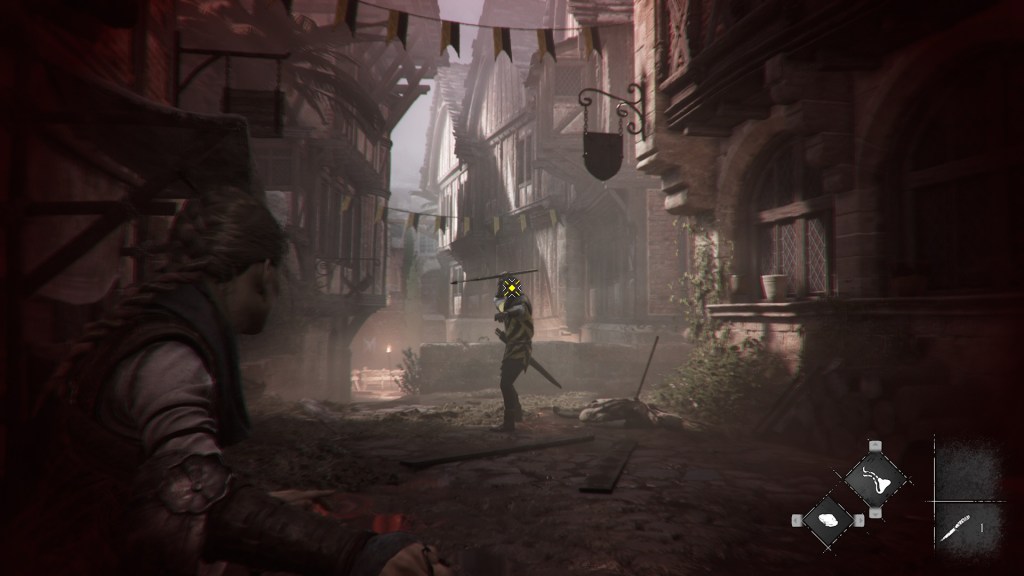
The way the rats look, sound and behave is all part of Asobo’s bigger plan to make A Plague Tale: Requiem one of the best looking games of this generation. The scenery is soft but sharp, each environment carefully coming off the screen in a way that makes you want to reach out and touch the flowers. But its art direction is still solid, folding itself around the level design to always keep you on the path it wants you to take.
And the same goes for other parts in how the game is presented. I want to give a special shoutout to the performances by the actors; Charlotte McBurney and Logan Hannan, who play Amicia and Hugo, are terrifyingly good. Their sibling dynamic is an easy thing to buy given how natural the chemistry appears between them, and this sticks all the way to the very end.

Similarly, supporting actors Kit Connor and Anna Demetriou also excel in the roles they play, both of them grounding the lead duo during their lowest moments. It’s really difficult to imagine A Plague Tale: Requiem without also thinking of Lucas and Sophia, and it’s heart-warming to see these characters also given enough care and attention without it taking away from the De Runes’ story.
I don’t think I’ll stop thinking about A Plague Tale: Requiem for a while. Even taking aside the vast improvements to stealth, combat and pacing, the sequel’s writing is exceptional. It’s interesting that a series originally inspired by The Last of Us has actually been able to reach a place I can comfortably say matches that same quality. Even days after finishing the game, I’m really struggling to play anything else. I just keep wanting to return to medieval France.
Tested on: Xbox Series X
 New Game+